

Make a Sweeter Choice: How to Find Sustainable, Ethical Chocolate
Too much of our chocolate is made with child labor, poverty wages, and deforestation. But your choices can help fix that—one bar at a time.

All graphics from Be Slavery Free, with permission
Love chocolate? Me too.
But here’s the bitter truth:
· Kids are working in dangerous conditions to make it.
· Forests are being destroyed to grow it.
· Farmers are paid poverty wages to produce it.
Most chocolate comes with a hidden cost. We can change that, one sweet bar at a time.

Ethical, sustainable chocolate is easier to find than you might think. And switching brands is a simple, low-cost way to make a big impact on people and the planet.
When you buy chocolate from companies that care about social and environmental issues, you send a powerful message. Your purchases show that you value sustainability. That pushes more brands to improve conditions for cocoa farmers, protect forests, and even inspire change across other industries.
If you're looking for an easy way to align your values with your spending, start with your chocolate.
What’s wrong with most chocolate?
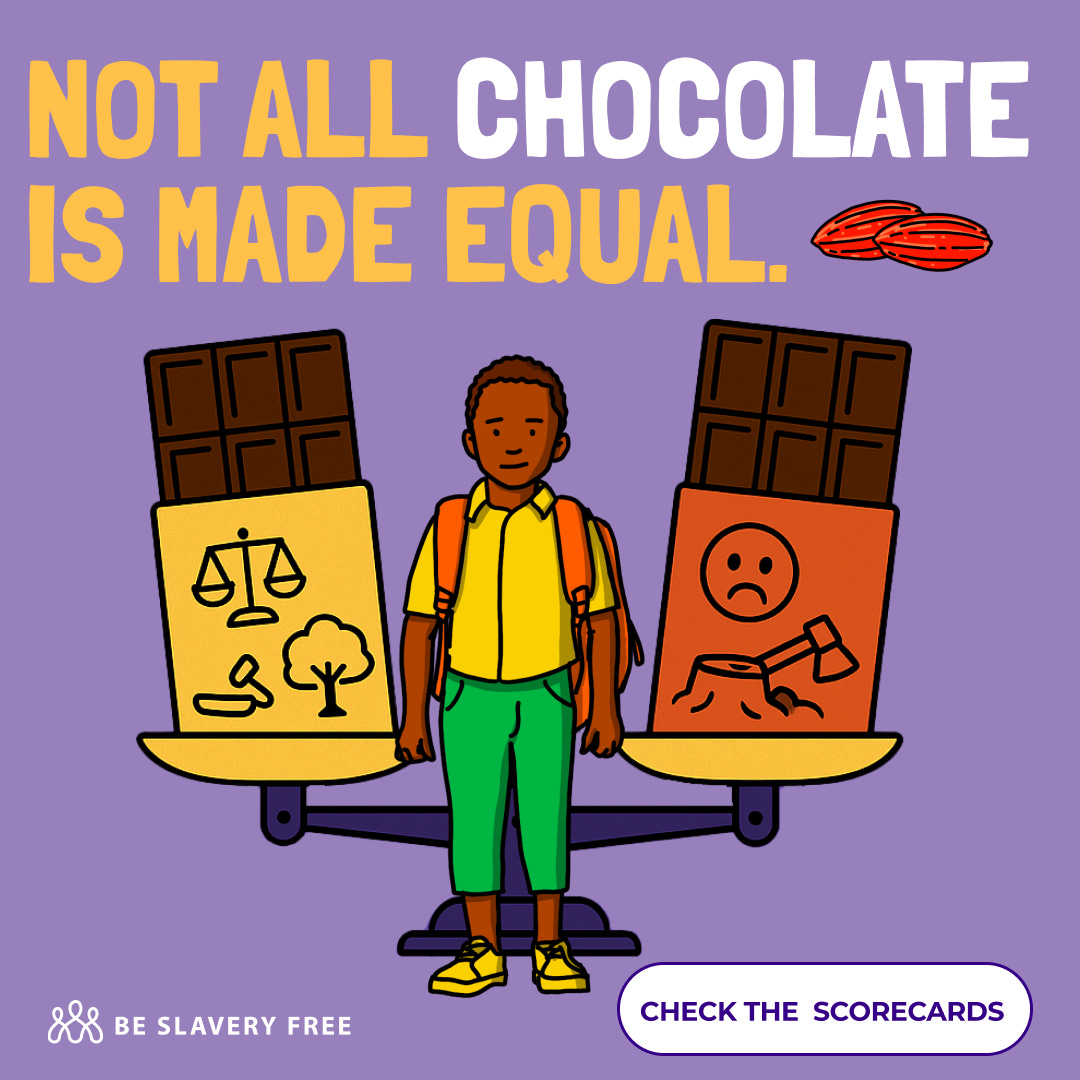
Around 90% of cocoa comes from smallholder farmers. They're the backbone of the chocolate industry—but most live in extreme poverty.
These farmers have no control over cocoa prices and often earn far less than a living income. That means they can’t afford labor, training, or basic resources.
And that leads to serious consequences:
Child labor: With no money to hire help, families rely on their children to work—keeping them out of school.
Forced labor: Desperate to stay afloat, some farmers turn to exploitative labor practices.
Hazardous chemicals: Unsafe pesticides are used to boost yields, harming farmers, families, and the environment.
Deforestation: Land is cleared unsustainably to grow more cocoa.


So how do you choose better chocolate?
Here are three simple options:
Buy from small “bean-to-bar” producers
Look for companies that share exactly where their cocoa comes from. If it’s not on the label, ask. Many small brands are proud to pay farmers fairly and will gladly share their sourcing info. What’s your favorite bean-to-bar chocolate?Look for trusted certifications
Labels like FairTrade USA, Rainforest Alliance, and Fair for Life ensure fair labor and eco-friendly practices.Use the Chocolate Scorecard or LeafScore
These tools are backed by nonprofits and research, helping you find chocolate that’s truly ethical
.
The Chocolate Scorecard rates companies based on six key criteria:
Traceability and Transparency – Can they track and share where their cocoa comes from?
Living Income – Are farmers paid enough to live with dignity?
Child Labor – Are there strong policies to prevent and respond to child labor?
Deforestation and Climate – Are they protecting forests and cutting emissions?
Agroforestry – Do they grow cocoa alongside other trees and crops to support biodiversity?
Agrochemical Management – Are they reducing harmful chemical use?
The Scorecard also awards a "Good Egg" to top performers in labor and environmental responsibility. An award is also given for Gender Equality efforts. Guess which brands are the Good Eggs of 2025? (hint: see comments)
Choosing better chocolate is one small step with big impact.
Let your next chocolate bar be a vote for fairness, sustainability, and a sweeter future for everyone.
What’s your favorite “bean to bar” brand? Share the love in the comments.

Good Egg chocolate companies for 2025: Over all brand TONY'S CHOCOLONELY; Over all small brand: BEYOND GOOD; Over all retailer COOP; For Gender Award: MARS
NB: the Chocolate Score Card is global. These winning brands may not be available where you live. Check out the full score card to find the brands that are easy for you to find.
Wonderful article, Diane. I've discovered how beneficial chocolate is for our mitochondria; it even helps produce stem cells! Chocolate is a powerhouse of incredible nutrients. It is so good to know where to buy sustainable chocolate. Thank you!