

Shop with your values for Spring
Use your shopping superpower to support biodiversity and independent businesses.

TLDR: Vote with your wallet: Buy flower and vegetable seeds from seed exchanges and independent seed companies that breed their own unique varieties.
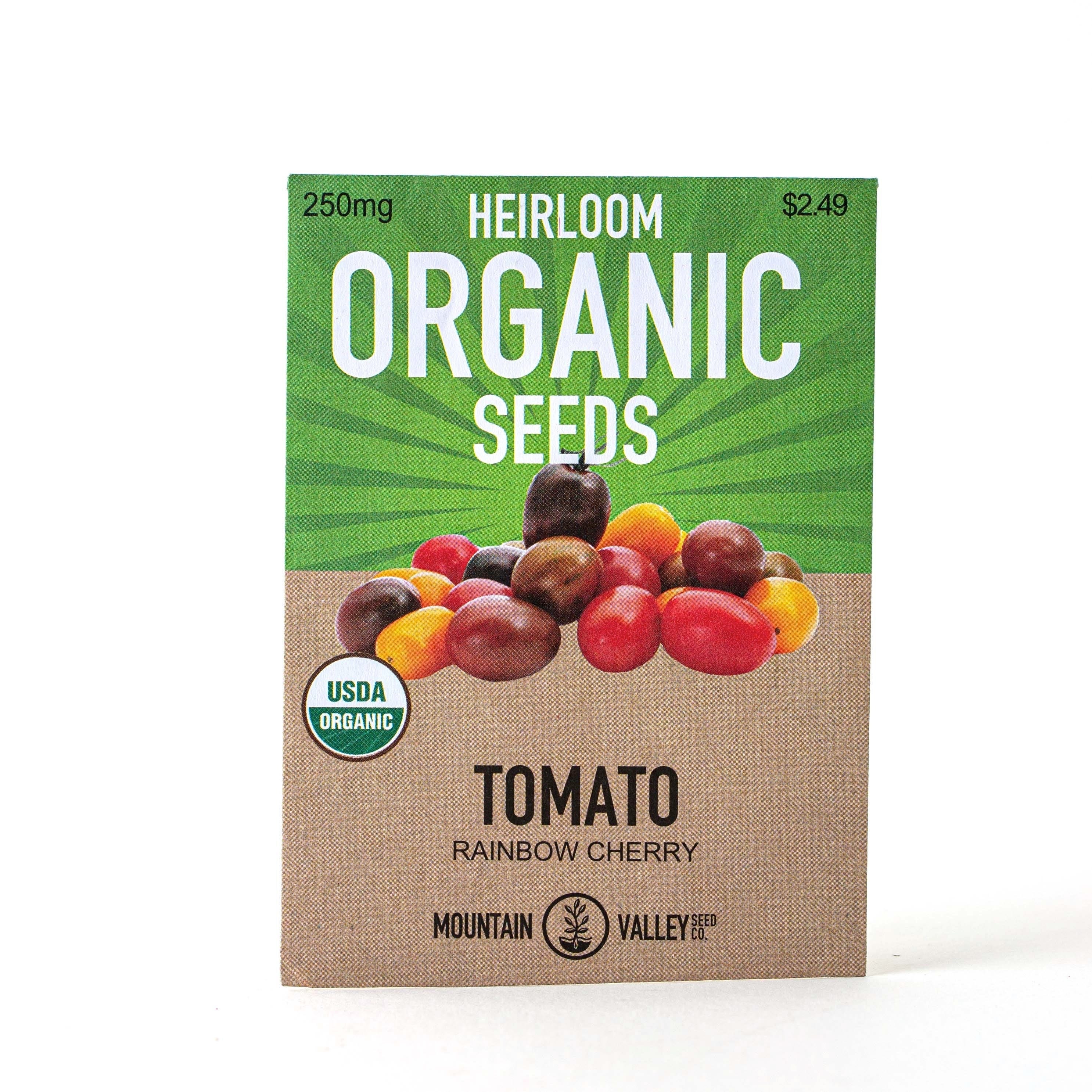
It’s snowing, time to order seeds for the garden. No matter your March weather, Spring is a great time to refresh your shopping habits and ensure what you buy reflects the qualities you wish to see bloom in the world.
Will you shop for seeds, plants, garden furniture and tools, cleaning supplies, fitness gear, and home improvement items this Spring? I’ll provide insights and tips for ethical and sustainable options for each category over the next few newsletters, starting today with the humble seed packet.

Garden Seeds
The seeds you buy impact the long-run health of the environment because your choices will either support or reduce biodiversity. Gardeners grow things for love, flavor, and curiosity rather than profit. This makes the home garden one of the most important places where plant and genetic diversity gets preserved.
This matters because:
Your garden becomes less diverse over time. Corporate seed breeding focuses on traits that sell at scale: uniform appearance, long shelf life, disease resistance. Maintaining varieties that provide regional adaptation, cultural significance, or just some fun and delightful variation get dropped. You end up with fewer real choices, even when the seed rack looks full.
Genetic narrowing creates fragility. Even if the number of named varieties is roughly stable, the genetic diversity underlying those varieties has narrowed — because many “new” varieties from corporate breeders draw from the same foundational germplasm. So one nasty disease can wipe out a lot of plants.
Patents block the natural process of seed saving and improvement. For most of human history, farmers and gardeners saved seeds, selected for traits they valued, and slowly improved varieties for their local conditions. Corporate patents make this illegal with proprietary seed varieties. This breaks a 10,000-year cycle of decentralized, community-driven plant improvement, and concentrates that power in boardrooms and among investors.
Lost varieties are gone forever. A seed variety that goes extinct cannot be recovered. Once a corporation stops selling a variety and no one is saving it, that unique genetic combination disappears permanently. The U.N. Food and Agriculture Organization (FAO) notes that up to 75% of cultivated plant genetic diversity was lost during the 20th century, largely due to commercial agriculture’s narrowing focus.
The political dimension. Whoever controls seeds controls food. When three corporations hold patents on the genetics underlying most of the world’s vegetable crops, they hold enormous leverage over farmers, gardeners, national food systems, and ultimately the food people eat.
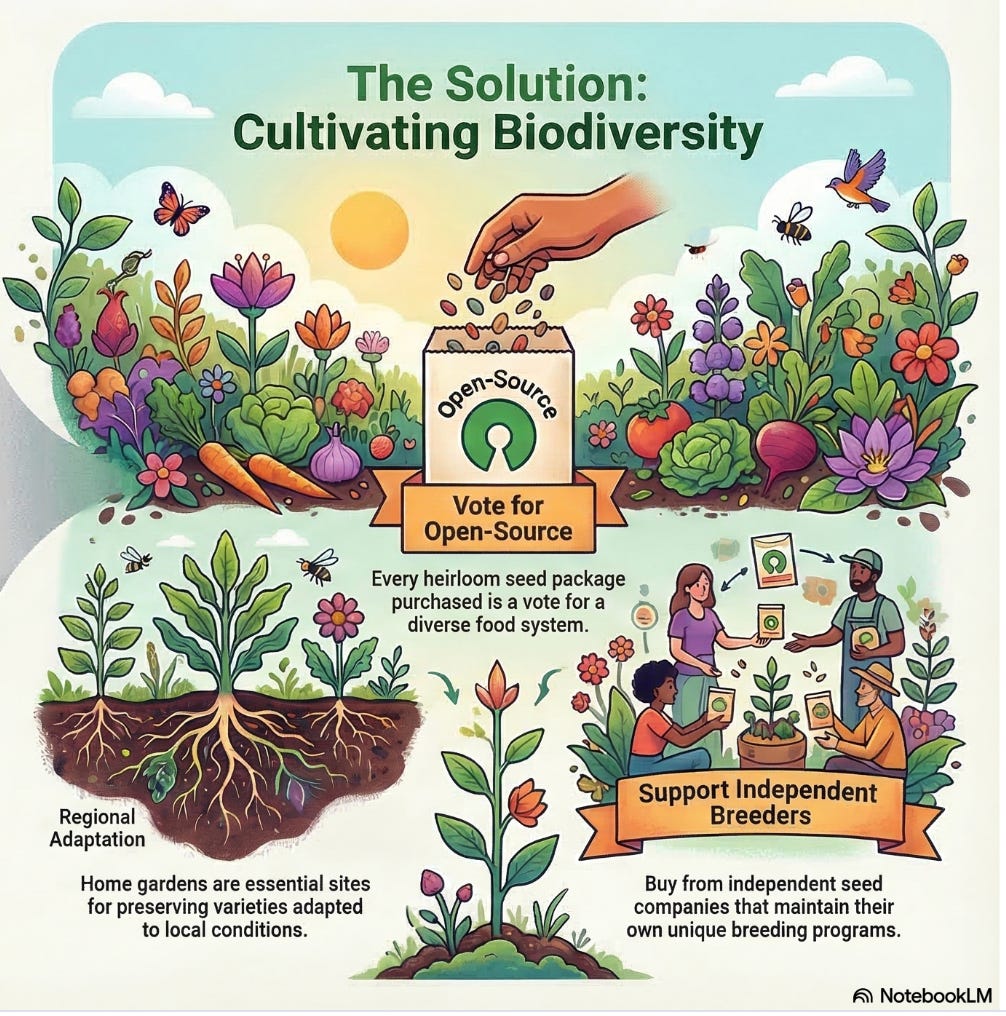
The good news is that home gardeners hold the power. Every open-source, heirloom seed package you purchase is a meaningful vote for biodiversity and the kind of food system you want to exist. The easiest way to support biodiversity in your garden is to ensure you buy your seeds from independent seed companies with their own breeding programs.
Why? More than half of the vegetable seeds on the market trace their genetics back to Bayer, Syngenta, or Corteva. These three giant chemical companies dominate most of the world’s pesticides and herbicides. Through decades of acquisitions, these companies now shape what seed varieties exist, which ones get improved, and which ones fade away. It’s not something printed on the seed packet, but it’s one of the most important things to understand – if you care about where your garden comes from and the how it affects all future gardens.
It’s not just ownership, it’s patents
Two companies, Bayer and Corteva, together own almost 80% of patents related to genetically engineered seed traits, which are used for improving plant varieties. That means that if any seed company or university wants to improve its plants, say for drought tolerance or hotter summers, if it uses any patented traits or crosses with patented germplasm, the genetics are controlled by Big Ag.

Where to find seeds that support biodiversity:
Seed Preservation & Exchange Organizations
Seed Savers Exchange (Iowa) — One of the most important seed organizations in the US, working to maintain a living collection of thousands of heirloom varieties passed down through generations of gardeners, completely outside the commercial breeding pipeline. Members exchange seeds directly. You can also buy from their catalog.
Native Seeds/SEARCH (Arizona) — A non-profit focused on saving arid-adapted, indigenous seeds from the Southwest and northern Mexico. It works towards Native American food sovereignty and is entirely independent of corporate genetics.
Independent Seed Companies with Their Own Breeding Programs
These companies breed their own varieties, meaning the genetics originate with them, not Big Ag:
Wild Garden Seed (Oregon)
High Mowing Organic Seeds (Vermont)
Fedco Seeds (Maine)
Uprising Seeds (Washington)
Siskiyou Seeds (Oregon).
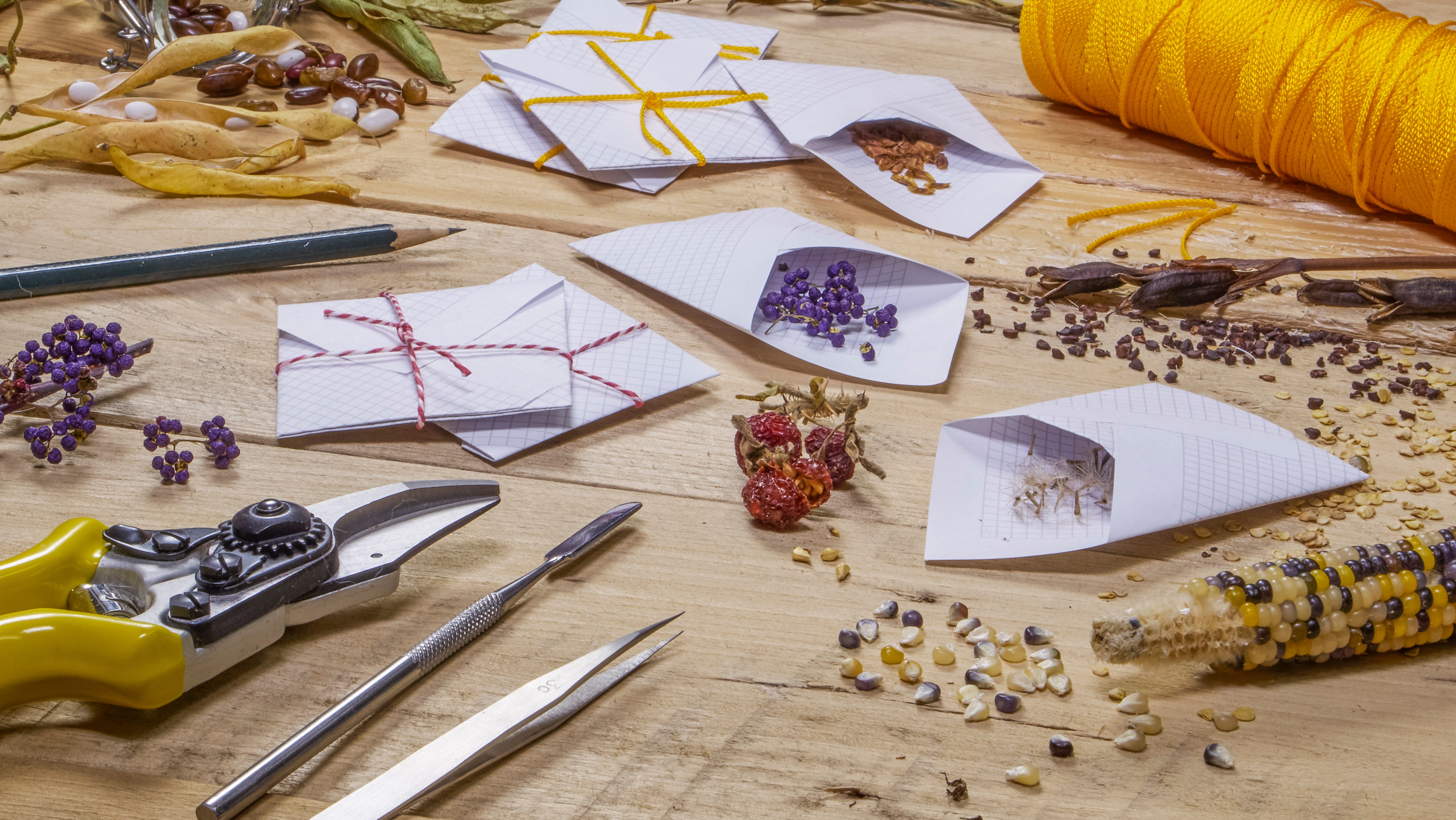
Save and trade your own seeds
Perhaps the most satisfying part of gardening is being a part of the life-cycle of plants. In my community, numerous organizations give away seeds for milkweed and other native plants that bees love. It’s a double biodiversity win: keeping open pollinating seeds growing and creating habitat for bees and other pollinators.
With minimal effort you can:
Save your own seeds from open-pollinated varieties
Trade seeds locally. Here are places to look for seed exchanges:
Local county extension office - great source for all gardening information
Local conservation districts or community gardens
Agricultural extension programs
Master Gardener programs
By doing so, you’ll support your local genetic and plant diversity for decades to come..
What else to know and do:
You may see reference to the OSSI-pledge on some varieties sold by the above companies. This is the Open Source Seed Initiative (OSSI), which works to maintain fair and open access to plant genetic resources worldwide. You don’t buy directly from OSSI, but many seed companies sell OSSI-pledged varieties — including Fedco, Wild Garden Seed, and High Mowing. A similar organization works globally, the Global Open Source Seed Initiative (GOSSI).
A lost variety is gone forever, taking with it centuries of careful human selection that no laboratory can recreate. May your garden grow beautifully this spring, and may what you plant today help ensure the bounty of life tomorrow.
For Canadian readers, here's a list my search came up with - do you have any experience or insights to share?
Canadian Seed Companies with Their Own Breeding Programs
These grow and breed their own varieties, with genetics originating on-farm:
-No Coast Seeds (Saskatchewan) — an OSSI partner that grows all seeds on-farm, open-pollinated and free of intellectual property rights, with active breeding programs producing farm-original varieties.
-Hawthorn Farm Organic Seeds (Ontario) — a certified organic seed company that produces vegetable and flower seeds on their own farm and in collaboration with other Canadian growers, certified organic since 1996.
-Moonglow Gardens (Alberta) — an artisanal seed-production farm on Treaty 6 Territory in zone 3, growing all seeds on their own farm using regenerative methods, with no outsourced seed from other growers or growing zones, and a strong commitment to seed sovereignty and regionally adapted varieties.
-Annapolis Seeds (Nova Scotia) — describes itself as 100% product of Atlantic Canada, growing heirloom and open-pollinated seeds with a goal of sharing the greatest possible diversity of seeds for their region.
Also Worth Knowing
Seeds of Diversity maintains a Canadian Seed Catalogue Index Seeds of Diversity — an invaluable directory of independent Canadian seed companies organized by province, similar to what OSSI does in the US. It's the best single resource for finding Canadian seed sovereignty companies beyond this list.
A comment from a subscriber: Here are two inspiring links for shopping and education:
Wild Ones
https://dupage.wildones.org
Seed exchanges and local tips
Aldo Leopold Foundation
https://mailchi.mp/aldoleopold.org/whats-all-that-noise-at-the-shack-13539214?e=a15ed83780
Terrific speakers
Thank you!